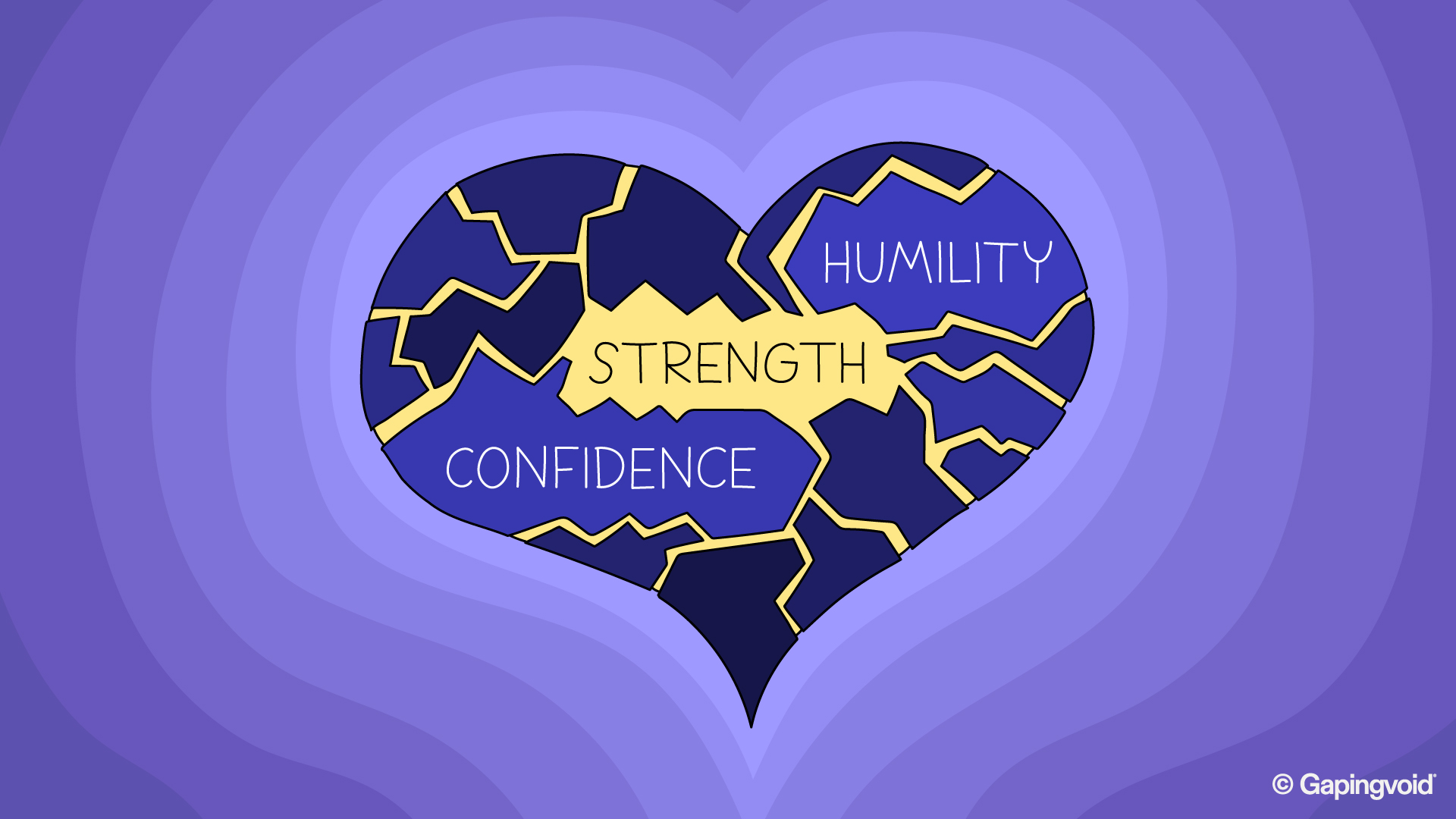
Confidence. Strength. Humility.
They're not a hierarchy. They're a combination.
The leader who has confidence without humility stops learning. The leader who has humility without confidence stops deciding. Strength is what holds both — the capacity to back yourself and change your mind, sometimes in the same conversation.
The paradox is that real confidence includes the humility to know you might be wrong. And real humility includes the confidence to act anyway.
Know when to have confidenceandKnow when to remain humble
When confidence serves your culture
Confidence creates forward motion. When a leader backs their judgment — makes the call, takes the position, commits to a direction — people can align behind it.
If your cultural aspiration includes decisiveness, momentum, or a team that moves without endless deliberation — confident leadership is often what makes that possible.
Confidence is also contagious. A leader who believes in where they're going makes it easier for others to believe in it too.
When confidence constrains your culture
Confidence becomes a constraint when it hardens into certainty.
When the leader stops listening because they already know. When alternative views get dismissed rather than considered. When being right becomes more important than getting it right.
There are no answers — there are only decisions.
A leader who has forgotten that tends to make decisions as though they're answers — and stops updating them when the evidence changes.
If your cultural aspiration includes learning, innovation, or honest challenge — false certainty is one of the most effective ways to shut it down.

When humility serves your culture
Humility creates space. When a leader genuinely doesn't know, says so, and invites the thinking of others — the quality of the decision usually improves. And so does the commitment to it.
If your cultural aspiration includes genuine contribution, shared ownership, or a team where the best idea wins — humility is what makes those things possible.
A leader who asks real questions, changes their mind when presented with better thinking, and credits others publicly — models the behaviour that makes teams genuinely better over time.
When humility constrains your culture
Humility becomes a constraint when it becomes hesitation.
When the leader won't take a position because they're afraid to be wrong. When decisions get deferred because humility is easier than commitment. When the team is waiting for direction that the leader won't provide.
If your cultural aspiration includes clarity, momentum, or a team that knows where it's going — a leader who is always in inquiry and never in commitment can leave people without the anchor they need.
Confidence is having a view. Humility is being willing to change it. You need both.
The question for your team
When you think about the culture you're trying to build —
Where does confident leadership create the conditions your team needs — and where does it close down the thinking you need?
Where does humility make your team smarter — and where does it leave people without the direction they're looking for?
What does it look like in your team when both are present at once?
Culture Science Cards creates the conversation where those questions get answered honestly — in the room, together.
Above the line. Below the line. In your context. For your culture.
Images in this post developed by © Gapingvoid Culture Design Group, and used with great thanks by Culture Science Cards.