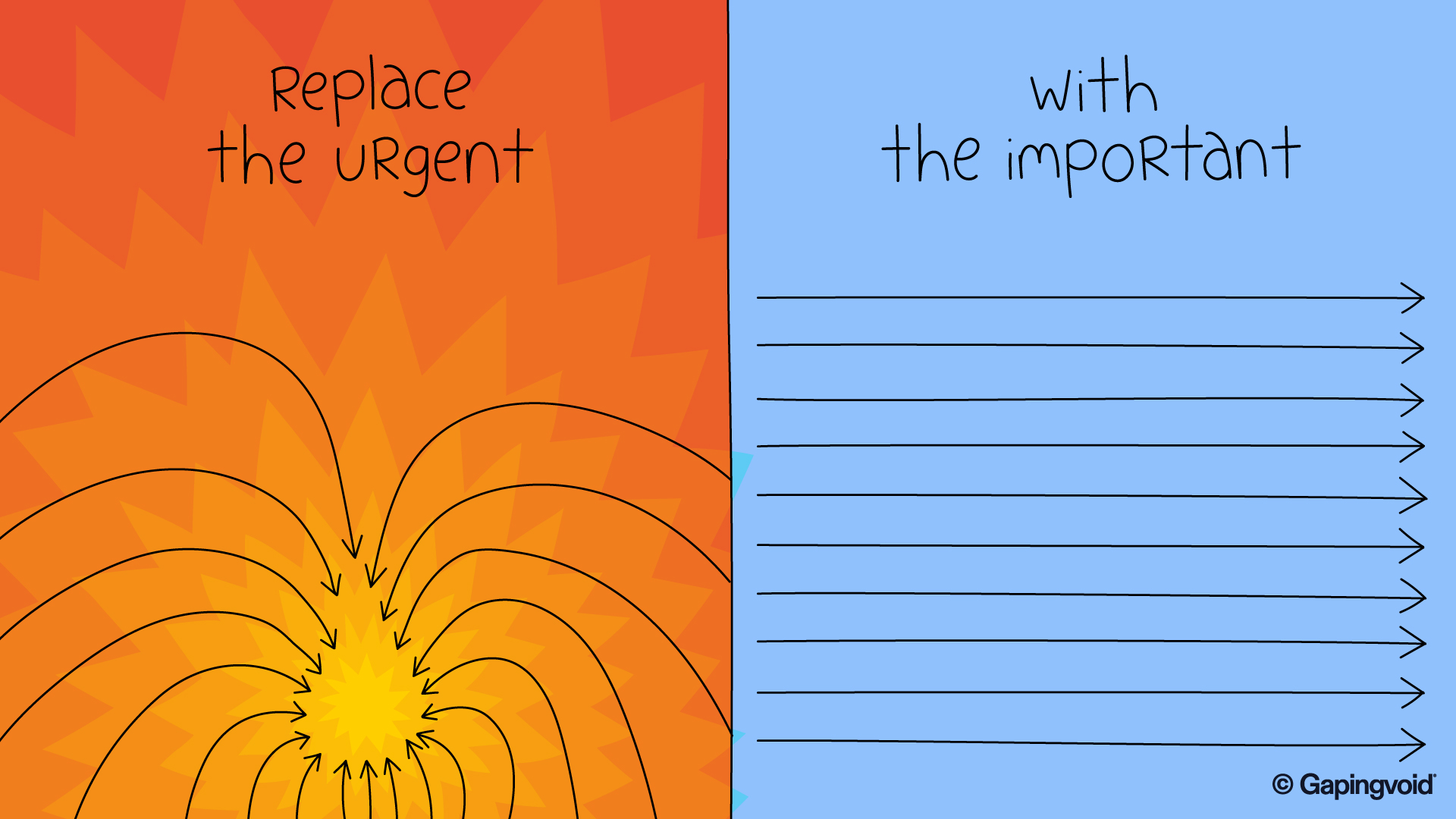
Replace the urgent with the important.
That's easier said than done — because urgency is loud, and importance is quiet.
Urgency announces itself. It creates pressure, movement, and the feeling that something is happening. It's hard to ignore and easy to respond to.
Importance doesn't do any of that. It waits. It requires you to lift your eyes from what's on fire and ask whether you're pointing in the right direction.
The paradox is that the teams with the best outcomes aren't the fastest or the most patient. They're the ones who know which one the moment actually calls for.
Know when to act with urgencyandKnow when to show patience
When urgency serves your culture
Urgency creates momentum. When a team moves fast — makes decisions quickly, responds to change, doesn't let things linger — it builds a culture of action and accountability.
If your cultural aspiration includes pace, responsiveness, or a team that gets things done — urgency is often above the line.
Urgency also signals that things matter. A leader who moves with pace and purpose communicates that the work is important and the time is now.
When urgency constrains your culture
Urgency becomes a constraint when it becomes the default — when everything is treated as urgent, and therefore nothing really is.
When the team is always reacting, never thinking. When speed crowds out quality. When important things keep getting deferred because urgent things keep arriving.
If your cultural aspiration includes quality, clarity, or a team that makes good decisions — a culture of permanent urgency is corrosive.
It produces activity. Not always results.
When patience serves your culture
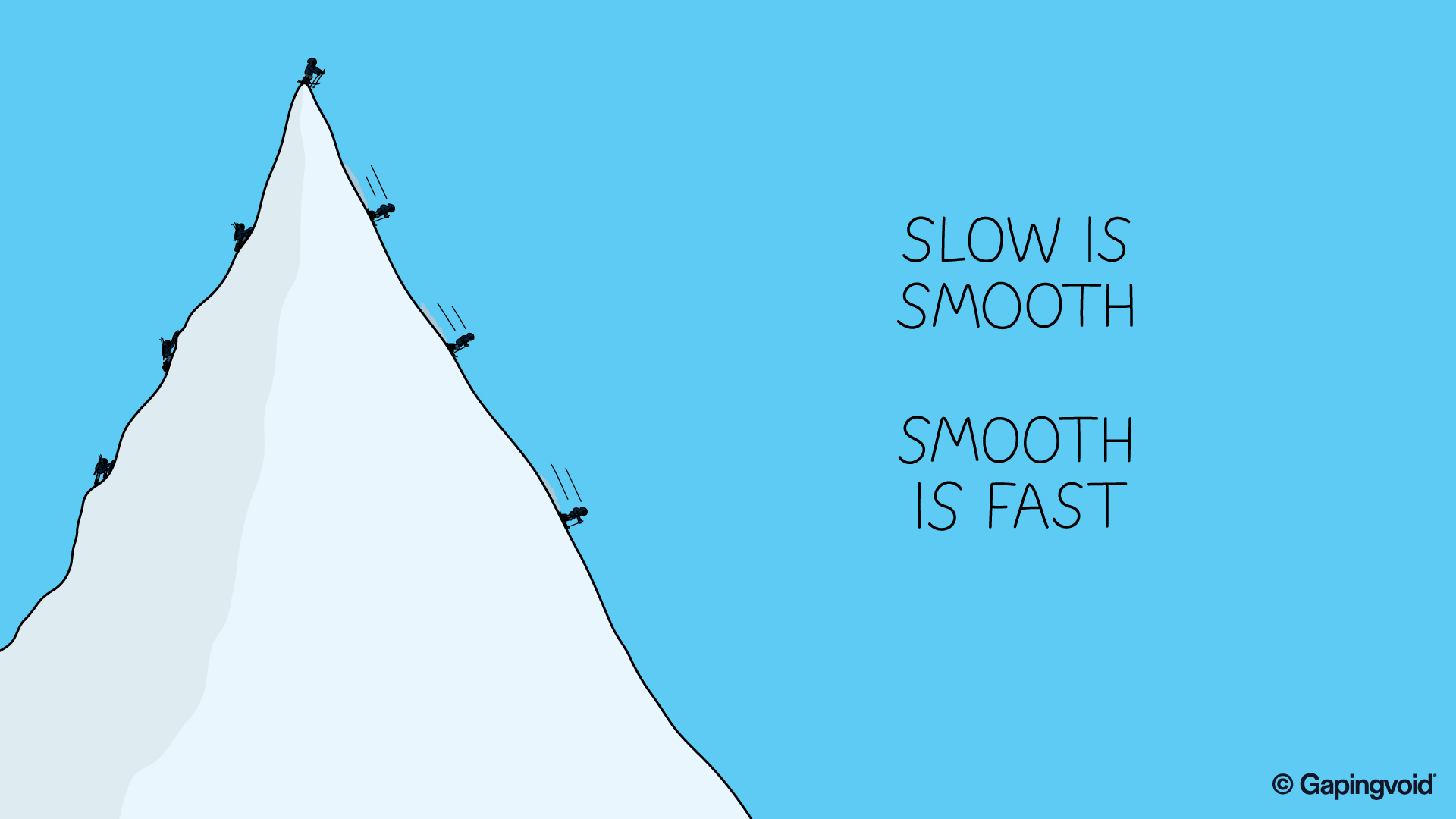
Slow is smooth. Smooth is fast.
Patience creates the conditions for quality. When a team takes the time to think clearly, align properly, and understand what actually matters — they move with more direction when they do move.
If your cultural aspiration includes quality, thoughtfulness, or decisions that stick — patience is often what makes those possible.
Patience also builds trust. A leader who doesn't rush — who takes the time to listen, to understand, to get it right — signals that people and outcomes matter more than pace.
When patience constrains your culture
Patience becomes a constraint when it becomes inaction.
When decisions get deferred indefinitely. When the team waits for certainty that will never arrive. When the cost of delay quietly exceeds the cost of deciding.
If your cultural aspiration includes momentum, delivery, or a team that makes things happen — a culture that mistakes caution for wisdom will consistently under-deliver.
Sometimes you have to slow down to get there more quickly. But sometimes slowing down is just slow.
The culture you want requires knowing the difference.
The question for your team
When you think about the culture you're trying to build —
Where does urgency serve your team — and where does it create the kind of noise that costs you?
Where does patience create the conditions for quality — and where does it become a reason not to decide?
What does it look like in your context when the team gets the pace right?
Culture Science Cards gives your team the language to make those distinctions — together, explicitly, in your own words.
Above the line. Below the line. In your context. For your culture.
Images in this post developed by © Gapingvoid Culture Design Group, and used with great thanks by Culture Science Cards.