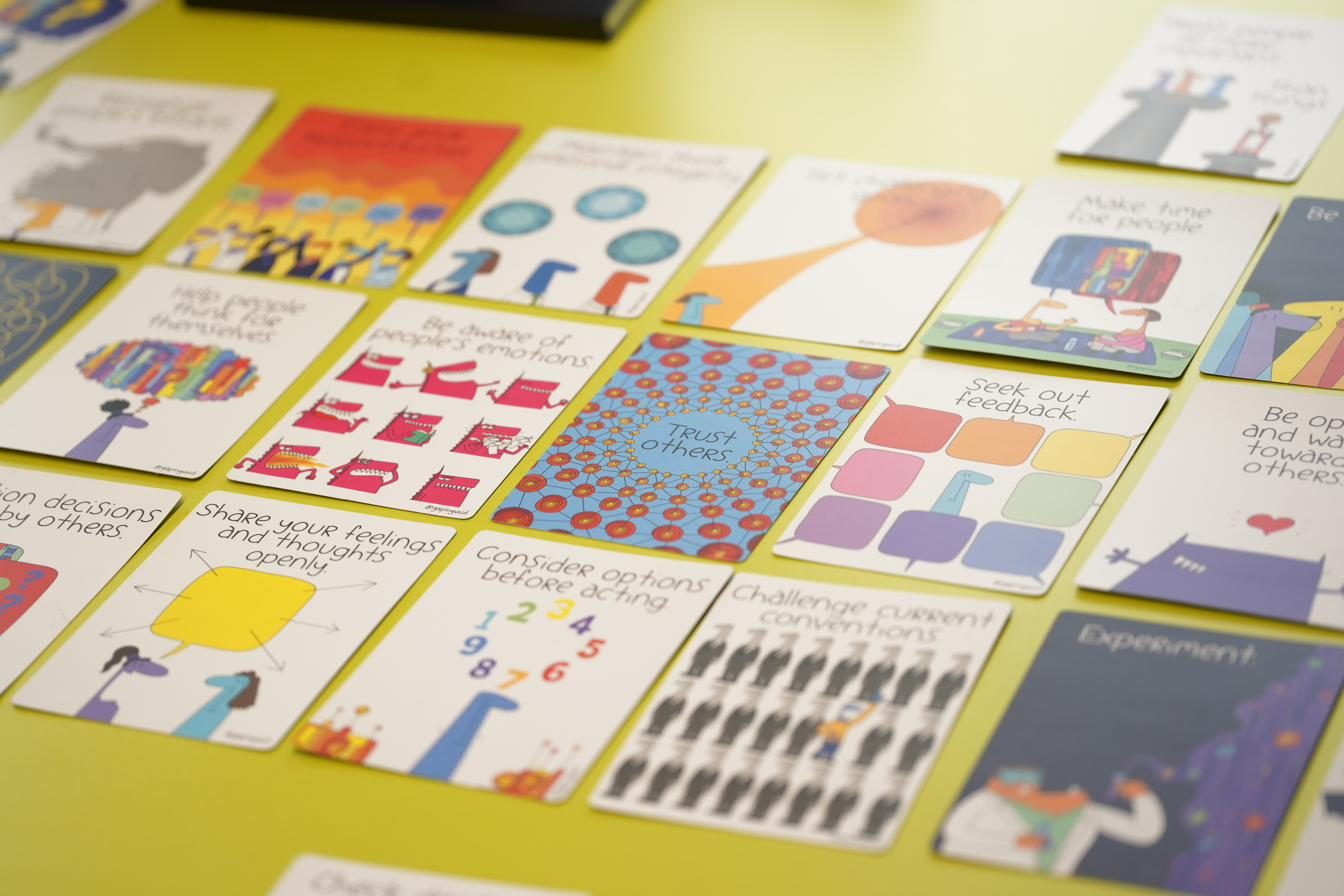
A 90-minute conversation that changes how a team works

Your culture is running by default. Agree the one you actually want.

Unspoken rules. Unresolved tension. Behaviours everyone tolerates but nobody agreed to. Culture Science Cards turn what's assumed into what's agreed — the whole team, in one room, in 90 minutes.

Try it · drag a card above or below the line
0 above  ·  0 below
Above the line · what we want more of Below the line · what we want less of
↑ above, or below? ↓  ·  nothing stays on the line

The question on the table: what mindsets and behaviours would allow this team to be its best, and which would hold us back?

For each card, the team weighs two things — then agrees where it goes.

01What value might this behaviour bring to the team?
02What constraint might it introduce in how the team works?

Then they decide — above the line, or below. Nothing stays on the line.

Used inside

The method

By the end, every behaviour is above the line — or below it.

A card can rest on the line while the team argues it out. But nothing stays there. The work of the session is moving every behaviour to where the team agrees it belongs.

Above the line

What we want more of

The behaviours the team chooses to make normal — not because a poster says so, but because they agreed to it, out loud, together.

On the line · for now

A temporary place to park a debate

Where the genuine disagreement happens. A card can sit here while the team argues — but it can't stay. By the end of the conversation, it moves up or down.

Below the line

What we want less of

Named honestly, without blame. Once it's on the table, it stops being the thing everyone privately complains about and becomes something the team owns.

Read the method in full →

The cards don't tell teams what to do.
They help teams decide what good looks like.

That's the difference between compliance and commitment.

The session

Not imposed. Not assumed. Agreed.

01

Deal the deck

Hand the behaviour cards to a group of four to six. No theory, no slides — just real behaviours they recognise from their actual work.

02

Sort the line

Above, on, or below. The disagreements are the point: this is the conversation a team has never quite managed to have.

03

Land what matters

The team leaves with one or two clear takeaways in their own words — and a conversation worth returning to. The value builds each time you run it.
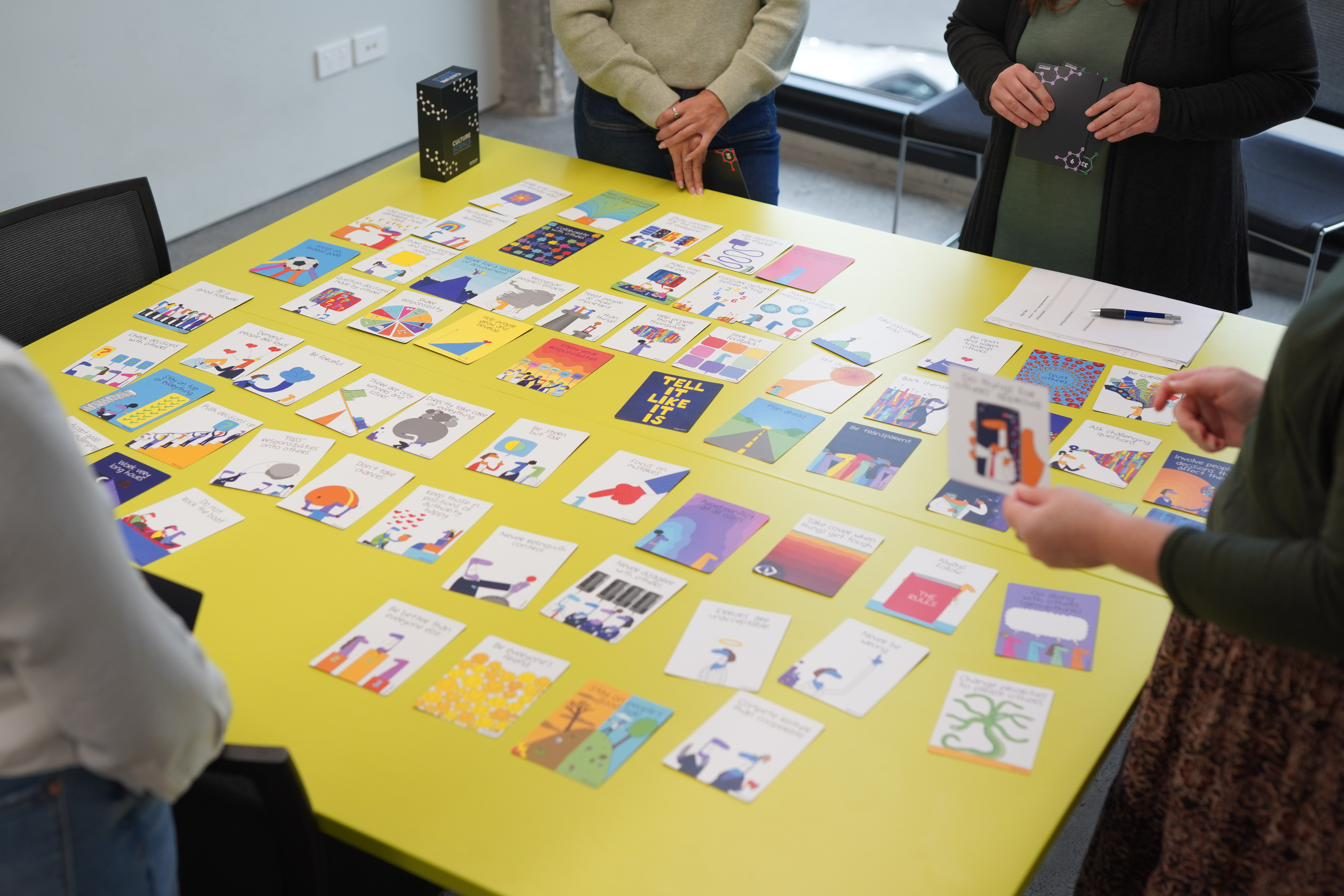
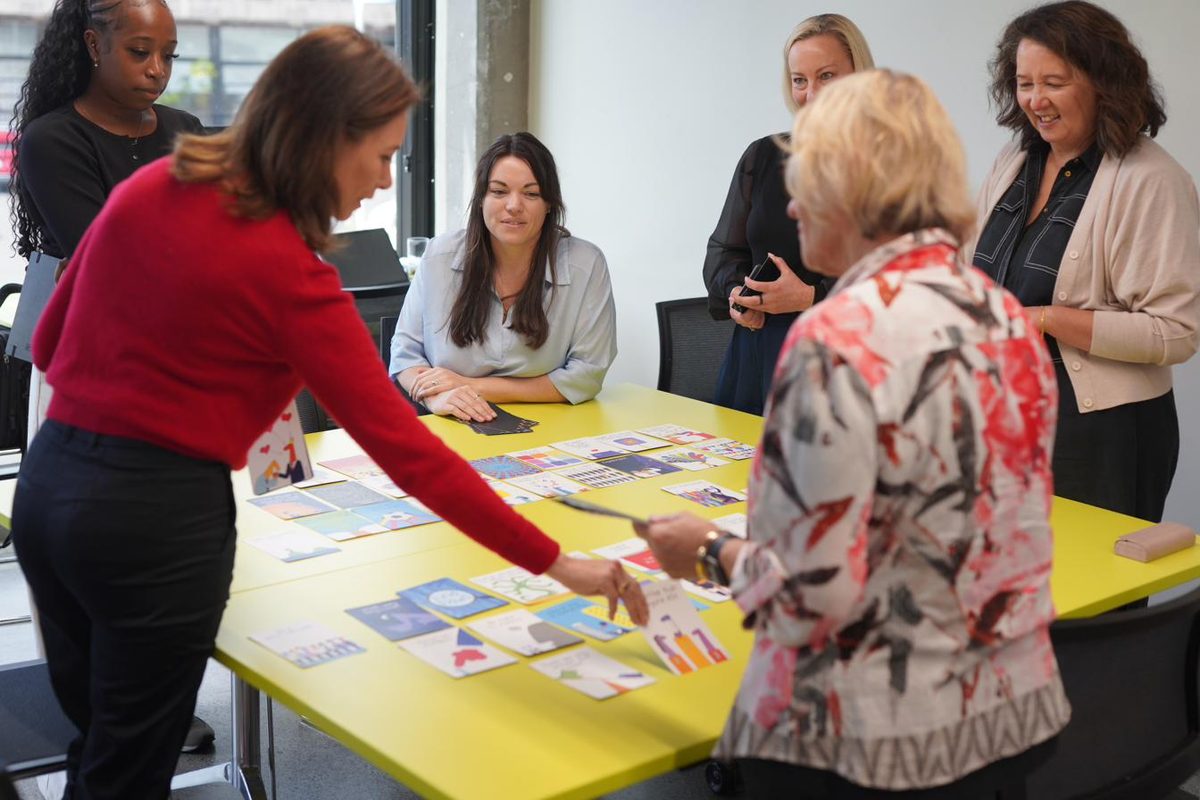
Every behaviour on the table — the line taking shape
The argument that matters, happening out loud
Above, below — sorted by the team, in their words
See how a session runs →

What's in the box

A complete system: 80 behaviours, 16 themes.

8
opposing themes — each an effective style and its less-effective opposite
80
behaviour cards — five per theme, sixteen themes
16
theme cards, set aside before the deal
90min
a standalone workshop — run it again on a new question
Look inside the deck →

The science

Why agreement beats instruction.

This isn't a personality test or a values poster. The method draws on decision science, behavioural economics and motivation research — because people think harder when there's no "right" answer, and commit to standards they helped define rather than ones handed to them.

Decision science · Kahneman

No right answer, deeper thinking

With nothing to comply with, people slow down and reason for themselves rather than reaching for the obvious response.

Behavioural economics · Thaler & Sunstein

Design the choice, don't dictate it

Shaping how a decision gets made produces more genuine outcomes than telling people what the decision should be.

Self-determination · Deci & Ryan

We commit to what we choose

Teams that define their own standards own them in a way that teams handed someone else's standards never do.

Read the research →

Who picks up the deck

Values are easy to say. Behaviour is what people actually feel.

For leaders

"Take more ownership"

means five different things to five people.

Define what good actually looks like with your team — and use it to guide real decisions, every day.

Get the cards →
For facilitators & consultants

Conversation is easy.

Alignment is the hard part.

Run structured sessions that move teams from talking to genuine, behavioural agreement. Get certified and access wholesale.

Become certified →
For organisations

Culture drifts team to team —

unless it's made explicit.

Build consistent behavioural expectations across leaders and teams, and reinforce them through everyday work.

Find a facilitator →

From the room

What happens when it's agreed.

"260 people agreeing what's above the line, below the line, and four themes to address. Stunning stuff."

People & Culture Director · Auckland

"Seriously the best activity we've done. I've never seen the crew so engaged and vocal — and so positive."

Operations Manager · Palmerston North

"What an amazing activity with our principals group. So connected, so good. Thank you."

Teacher · Canterbury

Where to next

Take a proper look.