The method

The conversation your team has never quite managed to have.

Culture Science Cards give a team a precise vocabulary for behaviour, and a structure for deciding — together — which behaviours they want more of, and which they want less of. No theory. No scores. No expert at the front telling them the answer.

Most culture work starts with values and hopes behaviour follows. This starts with behaviour and lets the values look after themselves.

The premise is simple: every team already has a culture. It's in what gets tolerated, what gets rewarded, and what everyone quietly works around. The problem isn't that the culture is unknown — it's that it has never been agreed. Different people carry different versions of "how we do things here," and nobody has put the two side by side.

A Culture Science session puts them side by side. It runs in about 90 minutes, needs no preparation from the team, and produces something a survey never can: a standard the team wrote itself.
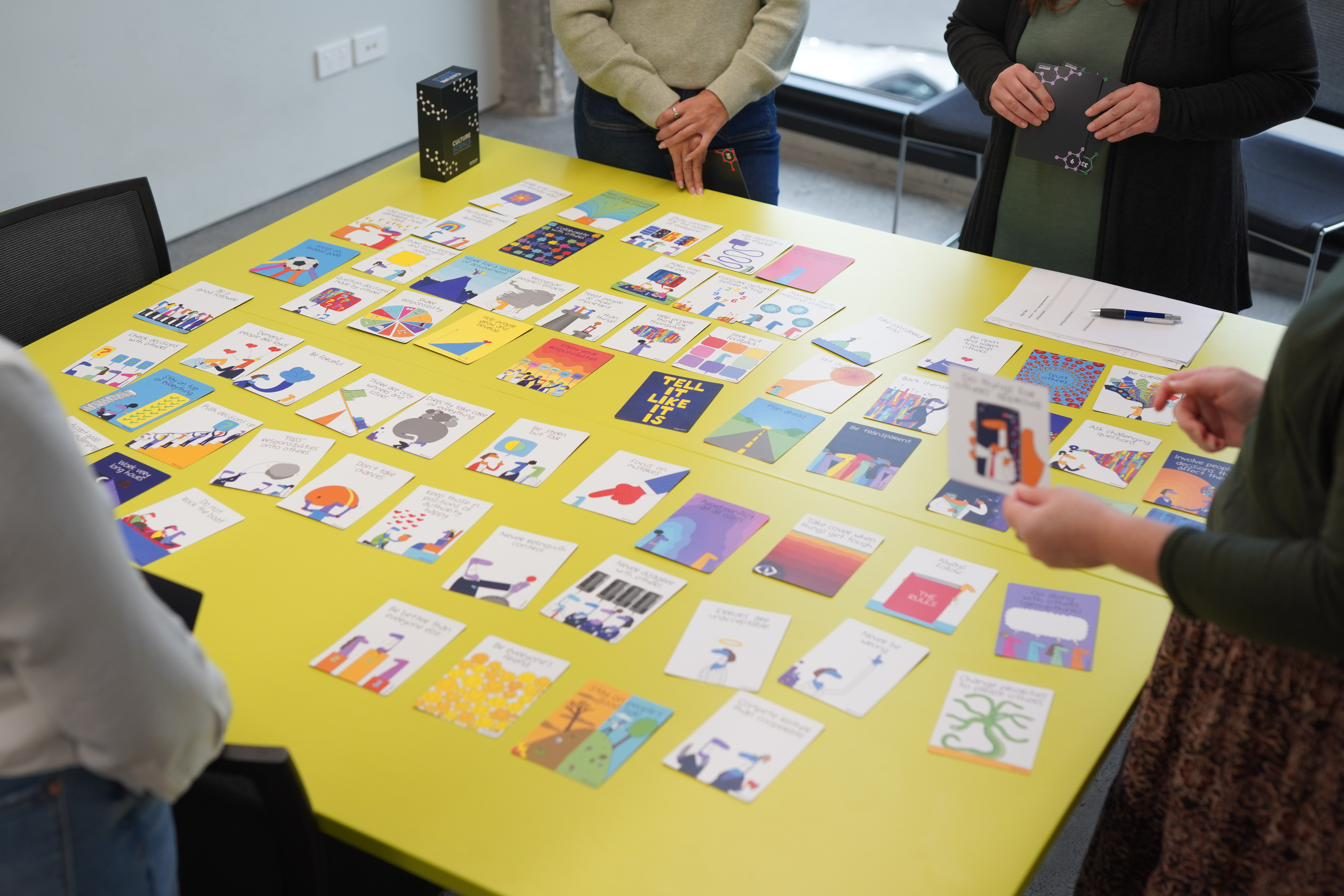
A team mid-sort: cards down, line forming, nothing settled yet

Not good or bad — how often

The deck doesn't sort behaviours into virtues and sins. Almost every behaviour on a card is useful sometimes. Be hard to impress can hold a bar high; it can also grind people down. Avoid conflict can protect a fragile moment; it can also let a problem rot for a year.

So the question is never "is this good?" — it's how often, and when? That's what makes the conversation honest. Nobody has to defend a behaviour as always-right or attack it as always-wrong. They just have to say what happens when it becomes normal here.
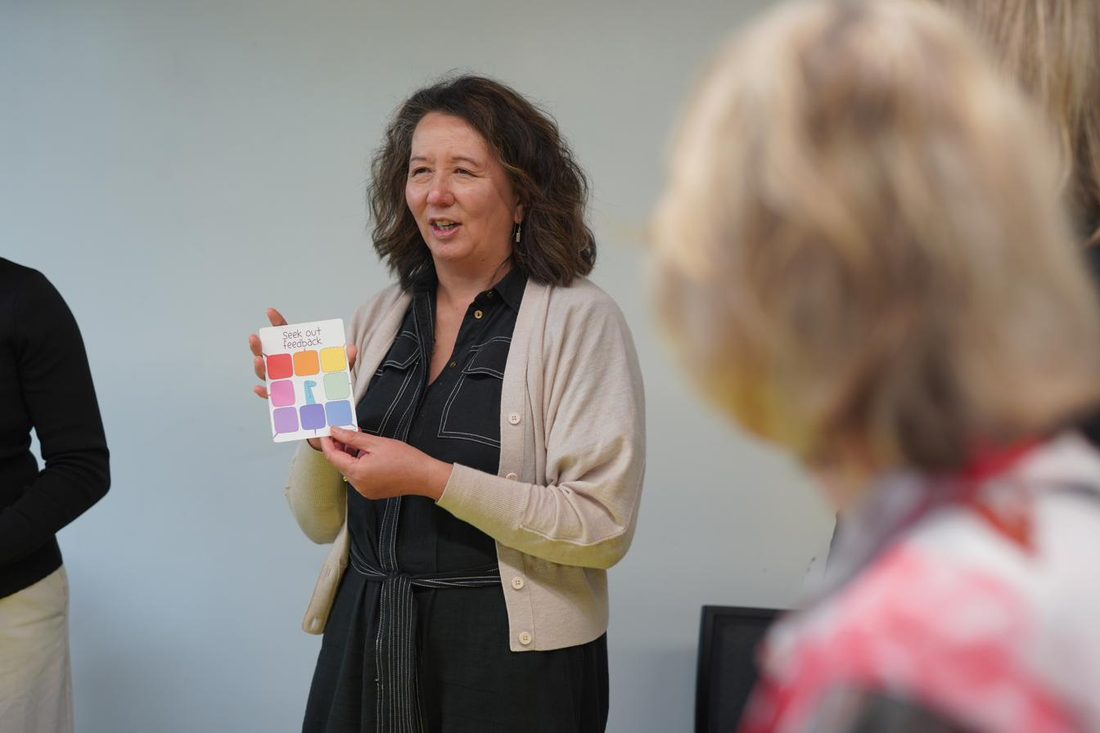
The line

By the end, every behaviour is above the line — or below it.

A card can rest on the line while the team argues it out. But nothing stays there. The work of the session is moving every behaviour to where the team agrees it belongs.

Above the line

What we want more of

The behaviours the team chooses to make normal — not because a poster says so, but because they agreed to it, out loud, together.

On the line · for now

A temporary place to park a debate

Where the genuine disagreement happens. A card can sit here while the team argues — but it can't stay. By the end of the conversation, it moves up or down.

Below the line

What we want less of

Named honestly, without blame. Once it's on the table, it stops being the thing everyone privately complains about and becomes something the team owns.

The two questions

Every card gets weighed the same way.

The question on the table: what mindsets and behaviours would allow this team to be its best, and which would hold us back?

For each card, the team weighs two things — then agrees where it goes.

01What value might this behaviour bring to the team?
02What constraint might it introduce in how the team works?

Then they decide — above the line, or below. Nothing stays on the line.

Both questions are asked of every card — including the ones that look obviously good. That's deliberate. A team that only interrogates the behaviours it dislikes will never notice that its favourite strength is also its blind spot.

The cards don't tell teams what to do.
They help teams decide what good looks like.

That's the difference between compliance and commitment.

The session

Not imposed. Not assumed. Agreed.

01

Deal the deck

Hand the behaviour cards to a group of four to six. No theory, no slides — just real behaviours they recognise from their actual work.

02

Sort the line

Above, on, or below. The disagreements are the point: this is the conversation a team has never quite managed to have.

03

Land what matters

The team leaves with one or two clear takeaways in their own words — and a conversation worth returning to. The value builds each time you run it.

What the facilitator does — and doesn't

The facilitator holds the structure, asks the two questions, and protects the silence. What they never do is supply the answer. The moment a facilitator says "well, obviously that one goes below," the session stops being the team's and becomes theirs — and the team goes back to complying with someone else's culture.

This is why the hardest skill isn't running the exercise. It's not rescuing the room when a disagreement gets uncomfortable. That disagreement is the most valuable thing in the session.

The facilitator holds the structure — and stays out of the answer

What teams walk out with

A set of behaviours the team has placed, by agreement, above and below a line — in their own words. Usually a handful of themes worth acting on. And, almost always, one conversation that had been waiting years to happen.

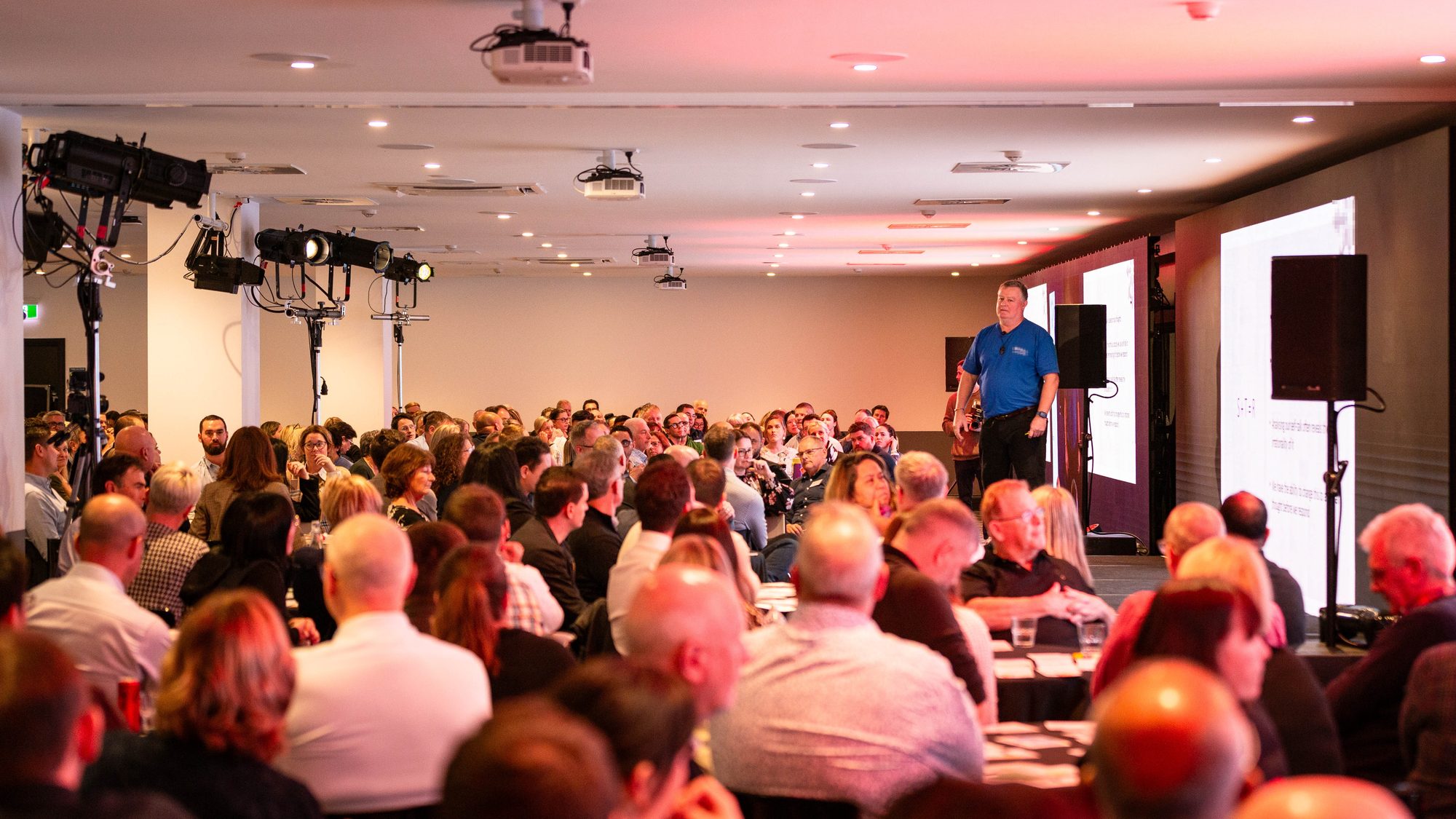
The same method, 260 people, one room — tables in parallel, themes converged at the end

Common questions

Before you run it.

How long does a session take?

Each exercise is a standalone workshop, typically 60–90 minutes. A simple rhythm works best: 5–10 minutes to set context, 45–60 to let the conversation develop, and 15–20 to land one or two clear takeaways. If time gets tight, don't rush — there's always time for more conversations. One real insight discussed properly is worth more than covering more cards.

How big should each group be?

Four to six is the sweet spot. Fewer than four and you risk too little conversation and too little diversity of view — there simply aren't enough perspectives in the room to disagree. More than six and the conversation starts to wander, and not everyone gets the chance to engage. Bigger teams don't change the method, they just mean more groups of four to six, running in parallel, converging on shared themes at the end. There's no upper limit in practice — we've run it with 260 people in one room.

Do we need a trained facilitator?

No. The deck ships with a User Guide and a Companion Guide, and plenty of leaders run it themselves. Certification exists for people who want to run it repeatedly, at scale, or commercially — and for the harder rooms, where the disagreement is the point and someone needs the skill to hold it.

Is this a psychometric or an assessment?

No. Nobody is scored, typed or rated. There is no report, no benchmark and no correct answer. It's a structured conversation, not an instrument.

What if the team disagrees and won't budge?

Good. That's the session working. A card can sit on the line while the argument runs — but by the end it has to move. Forcing that decision is what surfaces the real difference of opinion, which is usually the thing the team most needed to say out loud.

Can we use it more than once?

It's designed to be. The same deck answers very different questions in very different contexts — so the same group often uses it many times over. The first session, the full sort, is the foundation: it puts the whole landscape of behaviour on the table. After that the base exercise opens up much more in-depth conversations — one theme at a time, or where the team drifts under pressure, or where leaders and their teams see things differently. This isn't a one-off exercise. The value builds through repeated conversations over time.

Where to next

Take it further.