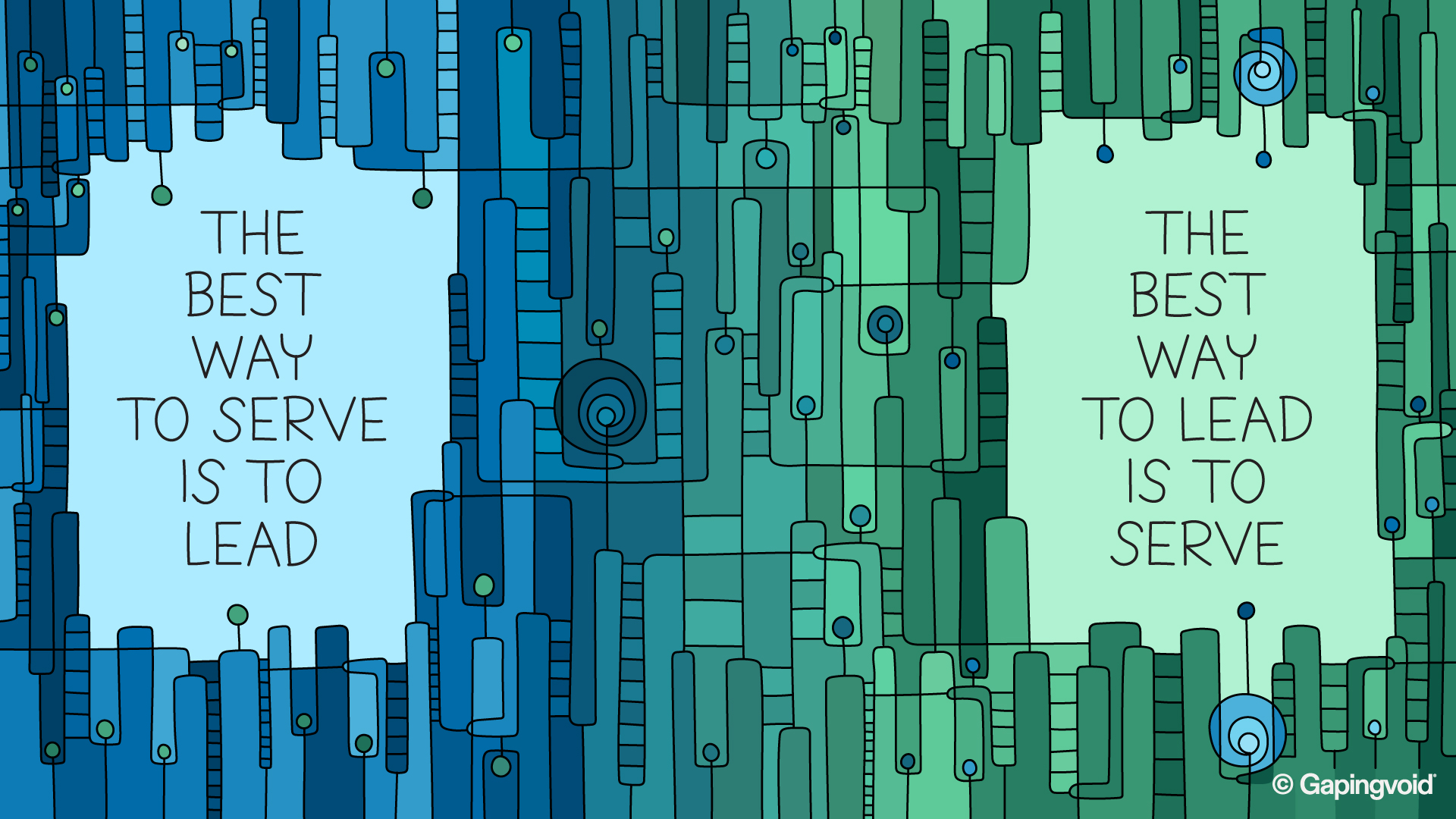
The best way to serve is to lead.
The best way to lead is to serve.
Both of those statements are true.
And they point in opposite directions.
Which is exactly the point.
A leader who only ever steps forward creates a team that waits. A leader who only ever steps back creates a team that drifts.
The question isn't which one you prefer.
It's which one your culture needs right now.
Know when to take the leadandKnow when to step back
When leading from the front serves your culture
There are moments when a team needs direction, not discussion. When the situation is unclear, when confidence is low, or when speed matters — a leader who steps forward and creates clarity adds enormous value.
If your cultural aspiration includes decisiveness, momentum, or high performance in demanding conditions — leading from the front is likely above the line.
It models conviction. It removes ambiguity. It says: I believe in this direction, and I'm willing to go first.
For a team that has agreed they move fast and commit fully, a leader who hesitates to step forward can feel like a gap, not a gift.
When leading from the front constrains your culture
Leading from the front becomes a constraint when it becomes the default — regardless of what the situation needs.
When the leader steps in too quickly, people stop thinking for themselves. When every problem gets solved from the top, ownership never forms.
If your cultural aspiration includes initiative, creativity, or genuine accountability — a leader who is always at the front can inadvertently hollow those things out.
The team performs. But it performs for the leader, not for itself.
When stepping back serves your culture
Stepping back creates space — for people to think, to decide, to own the outcome.
If your cultural aspiration includes autonomy, development, or a team that solves its own problems — stepping back is often the most powerful thing a leader can do.
It signals trust. It creates accountability. It says: I believe you can handle this.
And when people rise to that — when they solve the problem, make the call, or find a better way than the leader would have — the whole team gets stronger.
When stepping back constrains your culture
Stepping back becomes a constraint when it tips into absence.
When the leader stays out of things that need attention. When drift goes unchallenged. When people are left without the direction they need.
Stepping back is not stepping away.
You can hand over responsibility. The accountability stays with you. The buck doesn't move.
If your cultural aspiration includes clarity, standards, or a team that knows where it's going — a leader who never steps forward leaves a vacuum that something else will fill.
The question for your team
When you think about the culture you're trying to build —
Where does your team need a leader to step forward — and where does it need space to lead itself?
What does stepping back make possible? And what does it risk?
Where does leading from the front create the conditions your culture needs — and where does it get in the way?
Culture Science Cards gives your team the language to have that conversation — and the structure to land somewhere together.
Above the line. Below the line. In your context. For your culture.
Images in this post developed by © Gapingvoid Culture Design Group, and used with great thanks by Culture Science Cards.