Most leaders are told to build strong relationships with their people.
And they should.
Trust is the foundation of everything. Without it, honest conversations don't happen, people hold back, and performance stays surface-level.
But here's what that advice leaves out.
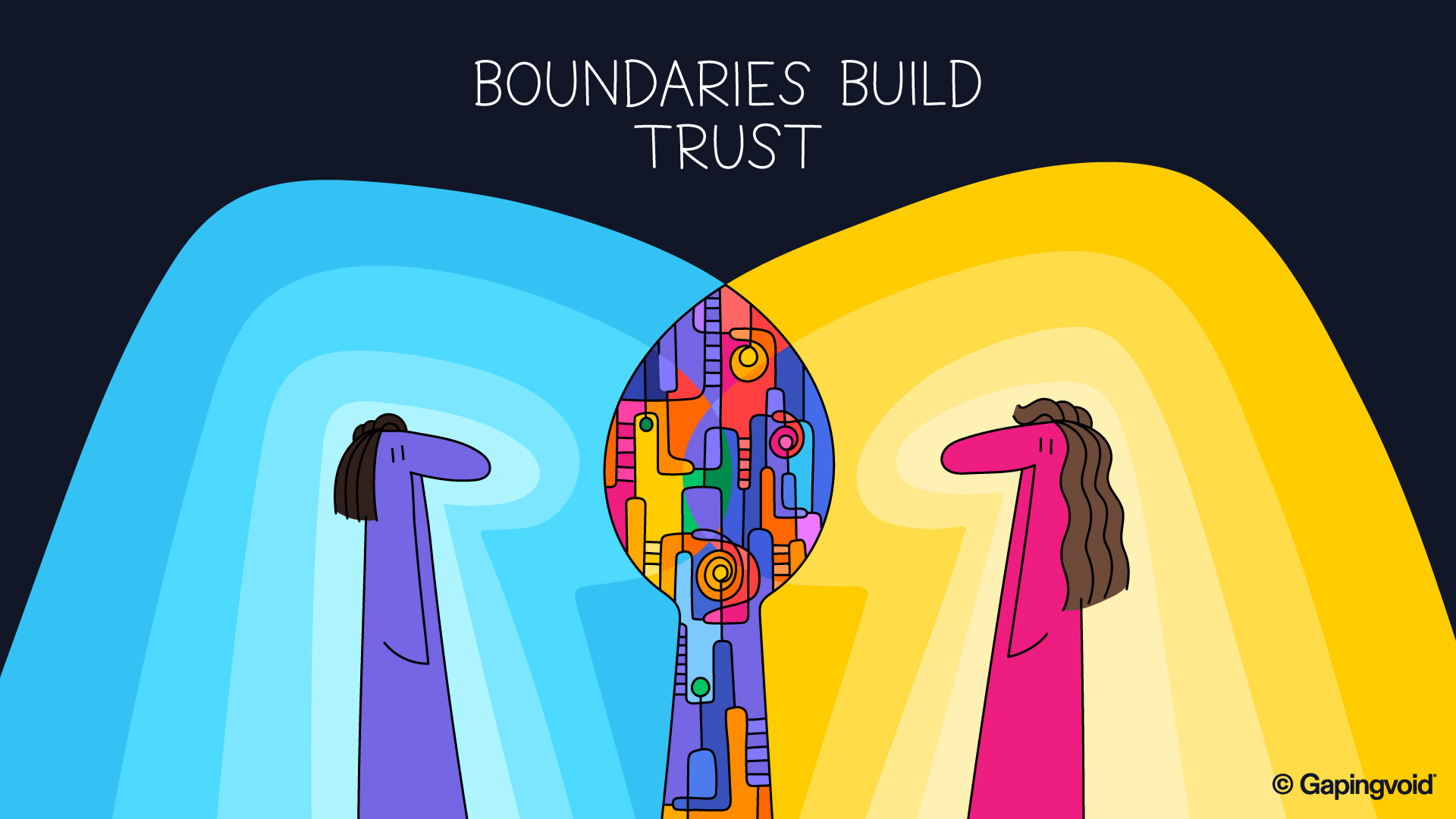
Distance can also build trust.
Knowing where you stand. Knowing what's expected. Knowing that when something isn't working, someone will say so — clearly, and without it being personal.
That's not coldness. That's respect.
And for some teams, in some contexts, that kind of clarity is exactly what trust looks like.
Know when to be close to your peopleandKnow when to keep the right distance
When closeness serves your culture
Close relationships create the conditions for honest conversation. People share what's really going on. Problems surface early. Commitment runs deeper than compliance.
If your cultural aspiration includes psychological safety, genuine collaboration, or people who go beyond what's required — closeness is likely above the line.
A team that has agreed they look out for each other, or that saying the hard thing is expected, needs a leader who is present, connected, and invested in people as people.
Closeness is what makes those behaviours real rather than aspirational.
When closeness constrains your culture
Closeness becomes a constraint when the relationship starts to protect itself.
When the leader softens the message to preserve the connection. When accountability gets traded for warmth. When everyone feels supported — and nothing changes.
If your cultural aspiration includes high standards, ownership, or honest feedback — unchecked closeness can quietly work against all three.
The relationship stays good. The performance stays stuck.
When distance serves your culture
Distance creates clarity. It signals that the work matters, that standards exist, and that the relationship is professional — which isn't the same as cold.
If your cultural aspiration includes accountability, independence, or high performance — appropriate distance can be the thing that makes those expectations credible.
People know where they stand. And that's its own kind of safety.
When distance constrains your culture
Distance becomes a constraint when it's a wall rather than a boundary.
When the leader is clear but unreachable. Decisive but disconnected. When people comply but don't commit — because they've never felt that the leader actually sees them.
If your cultural aspiration includes trust, candour, or genuine engagement — a leader who is always at arm's length will struggle to build any of it.
People follow leaders they feel connected to. Distance that never closes leaves people performing for the role, not for the team.
The question for your team
When you think about the culture you're trying to build —
What does closeness make possible that you couldn't get any other way? And what does it risk?
Where does distance serve your people — and where does it leave them without what they need?
This isn't a question with a universal answer. It's a question worth putting on the table — together.
That's exactly what Culture Science Cards is designed to help you do. Not to decide for your team, but to create the conversation where your team decides for itself.
Above the line. Below the line. In your context. For your culture.
Images in this post developed by © Gapingvoid Culture Design Group, and used with great thanks by Culture Science Cards.