In 2012, Michael Norton, Daniel Mochon and Dan Ariely published a paper with a deceptively simple finding: people place disproportionately higher value on things they have partially created themselves.
They called it the IKEA effect — after the flat-pack furniture company whose products require assembly by the purchaser. Participants in their experiments valued their own assembled IKEA boxes more highly than identical pre-assembled ones. They valued origami figures they had folded themselves more than expert-folded equivalents. The labour investment, not the objective quality, was the source of the additional value.
This finding has obvious implications for individual product design and consumer behaviour. Its implications for organisational culture change are less explored — and considerably more significant.
The organisation that receives a report vs the group that builds a map
Consider two organisations going through a culture change process.
The first commissions a culture survey, receives a diagnostic report, and is presented with findings about where their culture falls short of the desired state. The report is well-designed, the findings are accurate, and the recommendations are sensible. The leadership team reviews it. Action plans are created. The process moves forward.
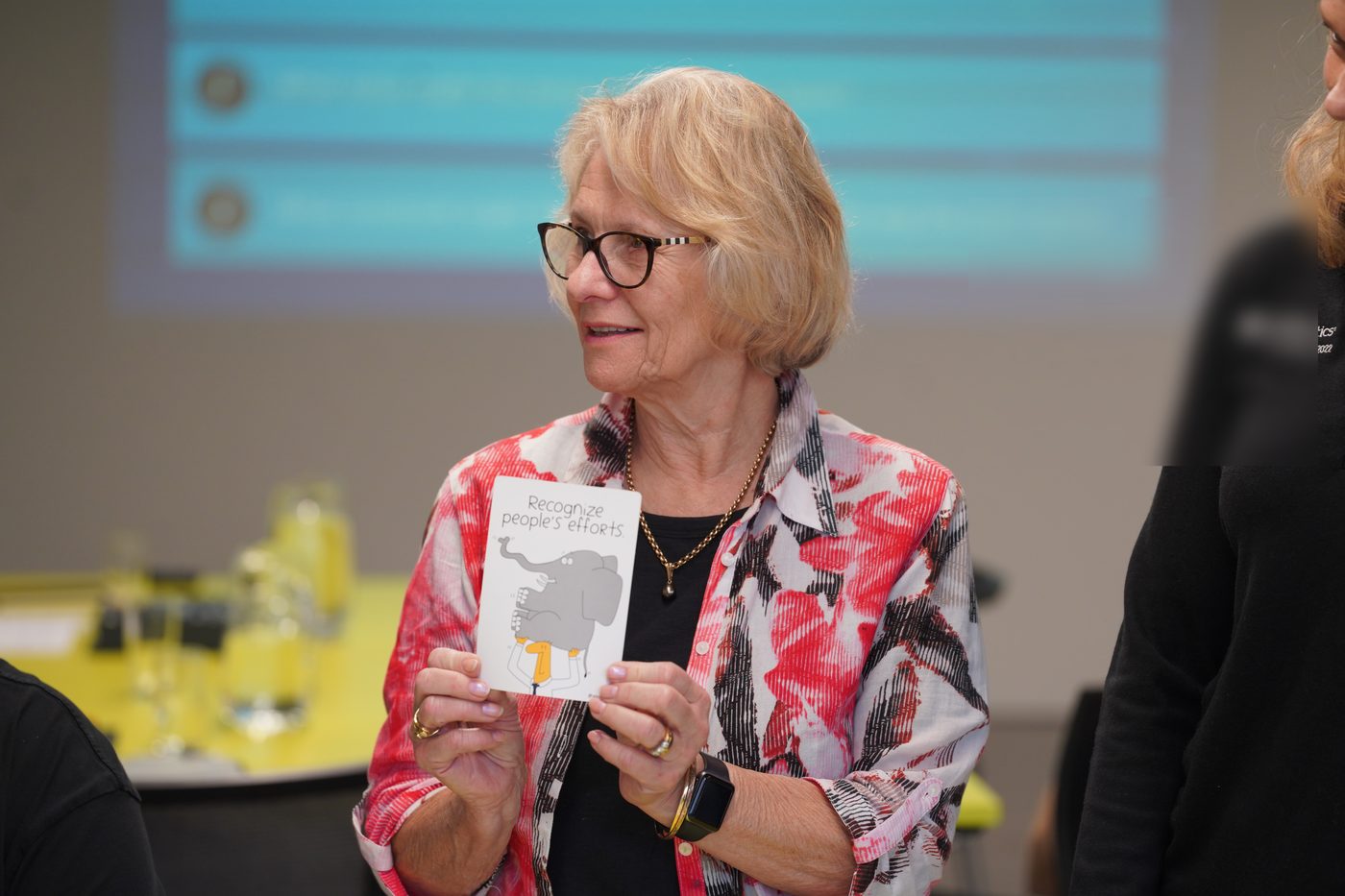
The second brings their teams together to sort Culture Science Cards — working through eighty behavioural items, placing each above or below the line through consensual discussion, building a culture map in their own words with their own hands. The map that emerges from this process identifies the same gaps the survey would have found. But the group found them. They built the map.
The organisation that receives a culture report has been given a product. The group that produces a culture map through the card sort has built something. That psychological distance is the distance between compliance and commitment.
Norton et al.'s research predicts that the second group will value their map — and feel responsible for acting on it — disproportionately more than the first group values the report. Not because the map is more accurate, but because they made it.
Why the effect operates at group level
The IKEA effect was established at the individual level. The card sort methodology produces what might be called a collective IKEA effect — a group-level analogue in which the culture map built together by a group is valued more highly than any externally produced equivalent.
The conditions that produce individual psychological ownership — control over the object's creation, intimate knowledge of it, investment of self in it — are all present in the group card sort simultaneously. Every participant has exercised control through their placement authority and the consensual negotiation process through which placements are confirmed. Every participant has developed intimate knowledge through the anchoring questions that require examination of every card from multiple perspectives. Every participant has invested something of themselves through the dealing mechanism that makes each of them a genuine contributor to the map.
Pierce, Kostova and Dirks's research on psychological ownership identified these same three routes as the conditions that produce commitment to outcomes significantly beyond what formal ownership or assigned responsibility generates. The group that has built its own culture map has not been assigned responsibility for culture change. They have constructed a shared artefact they genuinely feel belongs to them.
What this means for how culture change is designed
The implication is architectural. If the mechanism that produces commitment is the act of building rather than the act of receiving, then culture change processes should be designed to maximise the group's genuine authorship of the outcome. Not consulting them about a map drawn by others. Not having them vote on options generated by a consultant. Having them build the map themselves — in their words, through their analysis, to their conclusions.
A culture change programme that ends with a consultant's recommendation, however excellent, has produced a product. A culture change process that ends with a group presenting their own map, in their own language, with their own commitments about what they're going to do differently, has produced a culture asset the group will defend.
That defence — the disproportionate valuation of what we have made — is not a psychological curiosity. It is the mechanism through which culture conversation becomes culture change.