There's a particular kind of culture conversation that feels productive while it's happening and produces nothing you can act on afterwards.
You probably recognise it. A group of smart, committed people in a room. A facilitator asking what kind of culture they want to build. Responses come quickly. People want to be a culture of trust. Of courage. Of psychological safety. Of authentic connection. Everyone agrees. Some people look genuinely moved.
And then, three months later, nothing has changed. The poster is on the wall. The values are in the onboarding. The behaviour is not.
The problem isn't commitment. It's language.
Virtue language and what it does
Virtue language — the language of qualities, dispositions, and admirable states — is the default register of culture work. We want to be courageous. We want to be honest. We want to care for each other. These are genuine aspirations. They produce genuine consensus.
They don't produce genuine change. Because you can't see courage. You can't observe honesty in the abstract. You can't design toward care as a quality.
Virtue language produces abstract agreement. Behavioural language produces specific, contestable, designable conversation.
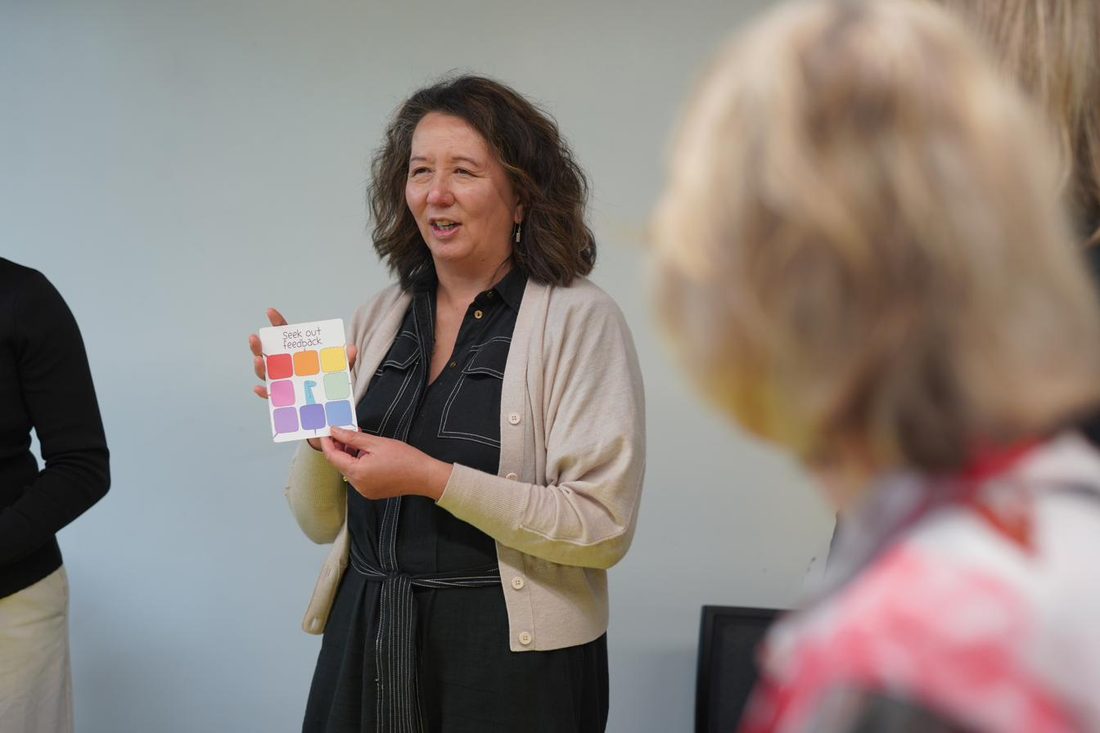
This was one of the most important lessons from the early development of Culture Science Cards. The first version of the taxonomy was organised around what we called the 16 Cs — a set of themes named for the qualities they represented. Clarity. Courage. Compassion. Contribution. Capability. Structurally elegant. Memorable. And fundamentally limited, because all of these are virtues rather than behaviours.
What groups did with those cards was telling. They sorted them quickly. They placed Courage above the line almost unanimously. They agreed that Compassion mattered. They moved efficiently through the deck. And they produced conversations that were general, abstract, and disconnected from anything specific to their actual working experience.
The shift to behavioural language
When we shifted to behavioural language — replacing Courage with specific, observable acts like back themselves when the organisation would prefer compliance, or tell it like it is even in rooms where silence would be safer — the conversation changed entirely.

People stopped agreeing reflexively and started thinking specifically. They could place the card differently because they had different experiences of the behaviour. Someone from a senior role saw it one way. Someone from a junior role saw it another. The difference in perspective became visible. The conversation that followed was specific, contested, honest, and grounded in the reality of what actually happens in this organisation.
This distinction has support from the implementation intentions literature — research on how people follow through on commitments. The finding is consistent: specific behavioural intentions produce significantly higher follow-through than abstract goal intentions. "I will be more courageous" is a goal intention. "When my manager dismisses an idea in a meeting, I will ask one follow-up question before letting it go" is an implementation intention. The former feels meaningful. The latter actually changes behaviour.
The practical implication
Look at your language. If your culture conversation produces words like trust, honesty, respect, innovation — words you could use in any organisation and everyone would agree with — you're using virtue language. You may be having a meaningful conversation. You're not having one that produces change.
Push for specificity. What does trust look like here, in this team, when it's happening? What does someone actually do when they're being honest? What's the specific behaviour that, if you saw it more often, would tell you innovation was taking hold?
The shift from virtue to behaviour is the shift from aspiration to design. And design is where culture change begins.