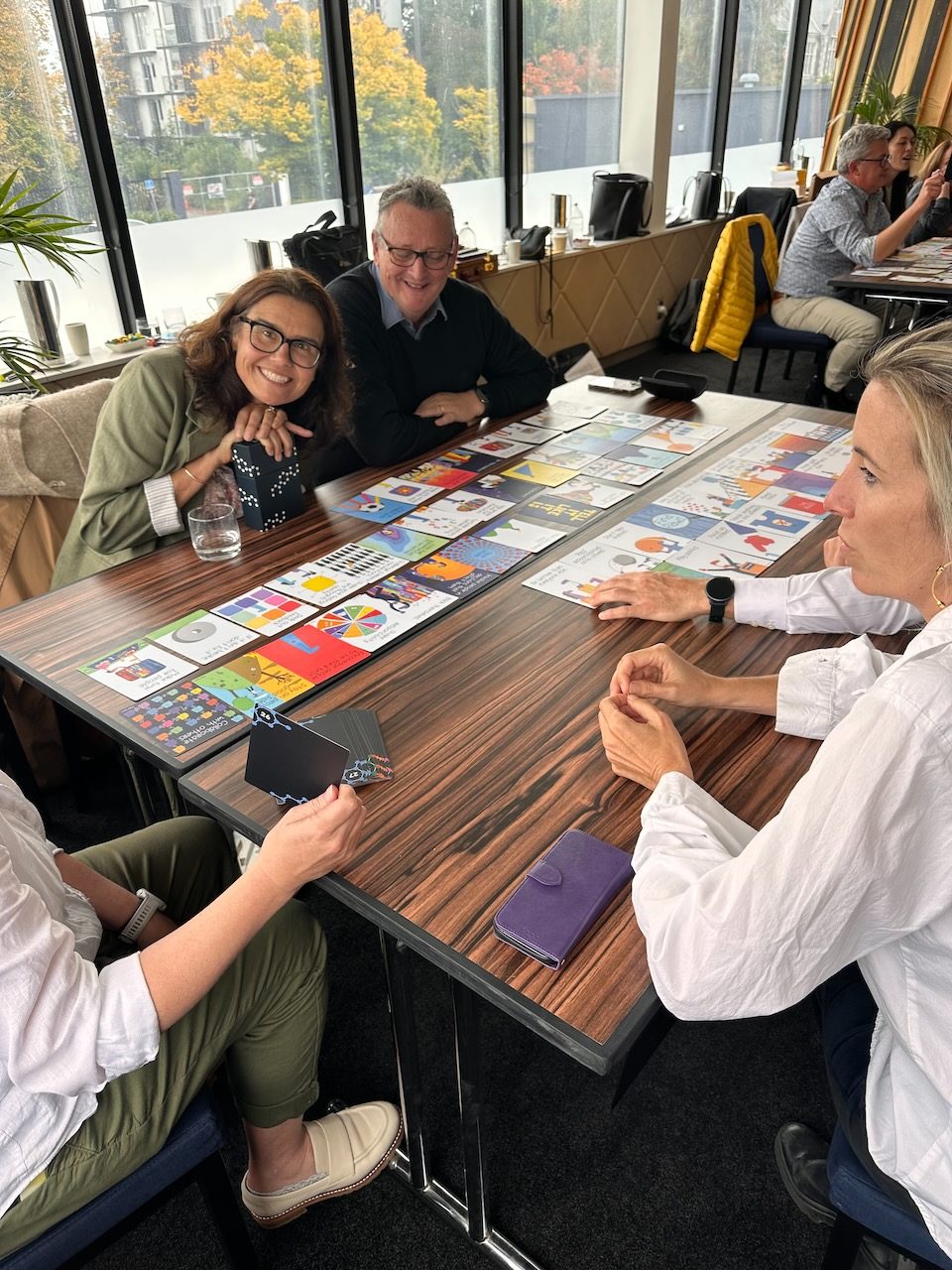
When people first encounter the above and below line structure of Culture Science Cards, they often read it as a moral binary. Good behaviours above the line. Bad behaviours below it.
This is understandable. We've been trained by culture instruments that classify behaviours exactly this way — constructive above, defensive below; positive above, negative below. The binary feels familiar.
It's also, in this case, the wrong reading.
Performance, not morality
The above and below line is a performance distinction, not a moral one. Above the line behaviours are those that can be practised regularly and consistently strengthen the conditions for high performance: trust, openness, ownership, collaboration, learning. Below the line behaviours are those that may have a legitimate occasional role but consistently weaken those conditions when they become habitual.
Nothing about this is a judgement on the people who exhibit below-the-line behaviours. Those behaviours almost always make sense given the pressures that produced them. Controlling behaviour makes sense in environments where mistakes have been punished. Approval-seeking makes sense in environments where honesty has been unrewarded. Fearful behaviour makes sense in environments where taking risks has ended careers. The pattern is the problem, not the person.
What the binary actually does
The binary forces commitment. There is no safe middle ground, no "somewhat positive." And positions invite dialogue in ways that scores never do.
Most culture instruments give participants a scale — a five-point or seven-point rating from strongly disagree to strongly agree. Scales are comfortable because they allow hedging. You can place yourself at 3, or 4, and the safe middle is always available. You can signal awareness without taking a position.
The line removes that option. Every card must go somewhere. Above or below. There is no safe middle, no ability to rate something as "somewhat positive" and avoid the conversation that a clear position would invite.
This binary forces a position. And positions invite dialogue in ways that scores never do. When one person places a card above the line and another places the same card below, the difference is immediately visible and immediately discussable. "You put be critical above the line. I put it below. Tell me what you're seeing that I'm not." That conversation doesn't happen when both people rate the item 3.7.
The physicality of it
The line is also physical. In a facilitated session, it's a literal feature of the space — a rope, a length of tape, an imagined threshold across the table. Cards go above it or below it. They're visible, movable, rearrangeable as the conversation develops.
This physicality matters in ways that are easy to underestimate. A sorted deck is a map of the culture that the team built together, in their own hands, in real time. It's not a report someone received — it's something they made. Research on the psychology of ownership consistently finds that people value, defend, and commit to things they've created far more than things they've been given.
The physical culture map that emerges from a card sort carries the weight of collective agreement. Every card placement was contested or endorsed. Every position was taken deliberately. The map that results isn't a summary of what an algorithm calculated — it's a representation of what this group of people decided, together, that their culture looks and feels like.
That's the facilitation device. Not good versus bad. Not virtue versus vice. A structured commitment mechanism that makes positions visible, makes divergence discussable, and produces a shared artefact that the team genuinely owns.
The rope on the floor is doing a lot of work.