The standard sequence in organisational culture work runs like this: measure, diagnose, prescribe. Find out what the culture is. Identify the gap. Close it.
This sequence feels rational. It follows the logic of any other diagnostic process. And it reliably produces the same result: defensiveness, compliance, and eventual return to existing patterns.
The problem is not the diagnosis. It is when the diagnosis happens.
Why starting with the diagnosis fails
When you begin a culture process by presenting people with findings about what is wrong with their culture, you activate precisely the defensive routines that Argyris spent his career documenting — the skilled incompetence through which organisations simultaneously acknowledge problems and prevent their resolution.
People who are told their culture is fear-driven, or low on psychological safety, or insufficiently collaborative, do not typically respond with open curiosity about why and how to change. They respond by explaining, contextualising, questioning the methodology, or identifying who is really responsible. The diagnostic has invited them into a position of evaluation, and the natural response is self-protection.
Cooperrider and Srivastva, in their foundational work on Appreciative Inquiry, identified the underlying principle: organisations move in the direction of what they study. Studying problems produces better problem identification. Studying aspirations produces better aspiration. What you lead with shapes what follows.
Starting with shared aspiration creates the psychological conditions that make honest diagnosis possible. Starting with diagnosis activates the defences that make honest aspiration necessary.
What envisioning first produces
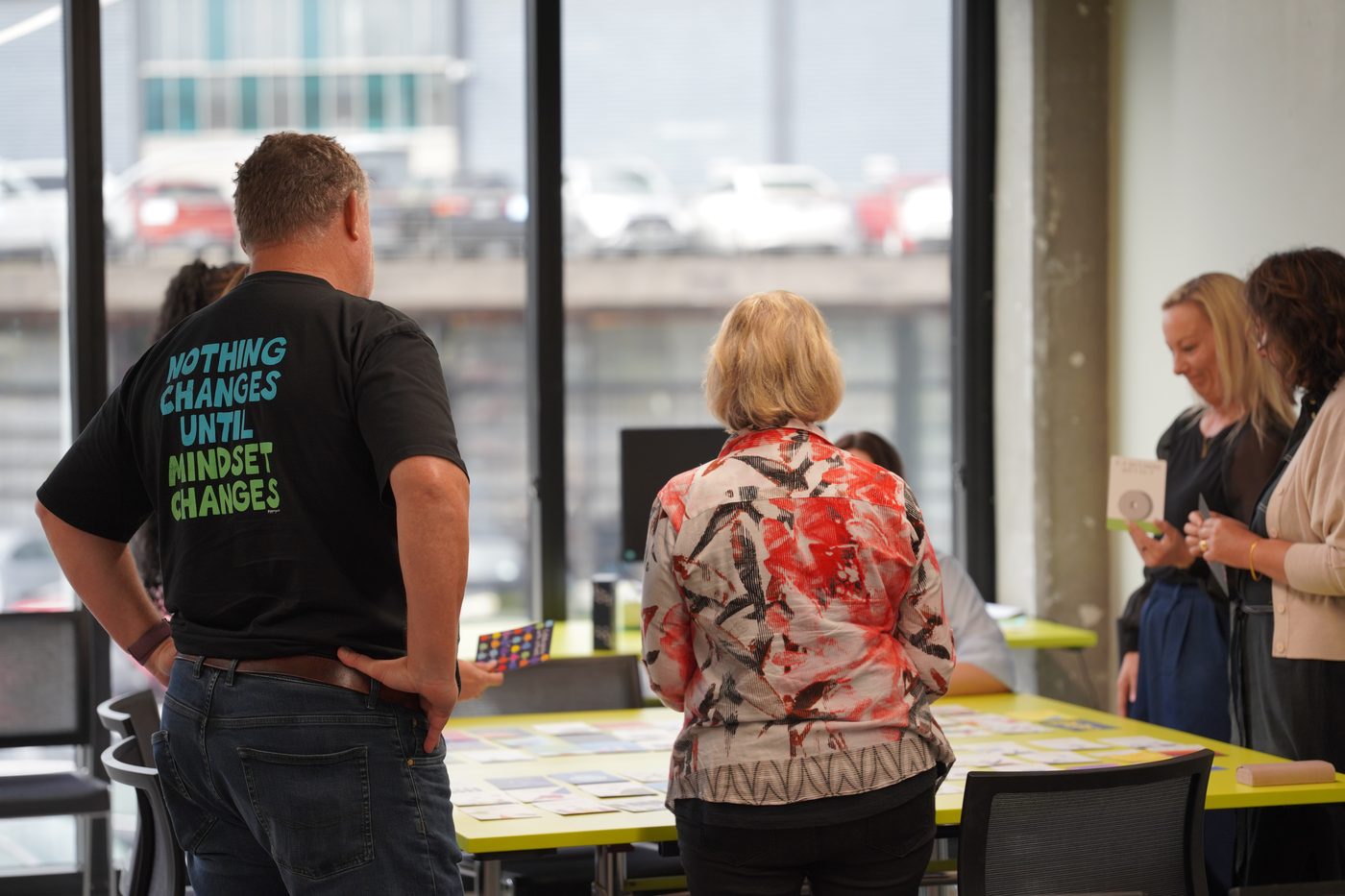
Five years of facilitated card sort sessions across more than fifty organisations produced a consistent observation: groups asked "what behaviours do we need in this team for you and your colleagues to perform at your best?" do not stop at answering that question. They move, spontaneously and without facilitation prompting, into diagnosis and then into design.
This was not planned. It was discovered — through the consistent observation that the envisioning question, answered in specific behavioural terms, immediately activated its own contrast. Comments like "yeah but we don't do that here" and "we do too much of this" arose not as complaints but as observations, anchored to specific cards and therefore discussable without personal accusation.
The mechanism is straightforward. When a group has collectively articulated, in specific behavioural language, what culture they want — and has built that articulation together through a process every participant has genuinely contributed to — the diagnostic question "where are we falling short?" is no longer threatening. It is navigational. They are not being asked to criticise themselves. They are being asked to identify the distance between where they are and somewhere they have already agreed they want to go.
The sequence in practice
The Envision-Diagnose-Design sequence that five years of practitioner inquiry produced is not a technique. It is a behaviour change architecture — a deliberately designed progression that makes each phase possible by the one that precedes it.
Envisioning creates shared aspiration and shared vocabulary. Diagnosis uses that aspiration as the reference point, making the gap concrete and specific rather than abstract and defensive. Design takes the specific gaps identified in diagnosis and asks the environmental question: not "how do we motivate people to practice these behaviours?" but "what in our environment is currently making the existing pattern the path of least resistance, and what would need to change?"
That last question — the design question — produces the specific, actionable, environmentally-focused commitments that culture change actually requires. Not "we will be more collaborative." Not "we need to improve our psychological safety." But "when this meeting starts, we will do this. When this situation arises, we will do that. The first person to notice us drifting will say so."
Specific commitments, built from aspiration rather than diagnosis, owned by the group that made them.
Envision first. The diagnosis and design that follow will be qualitatively different from anything that starts where most culture programmes start.